In short:
- Most content about laser therapy and sciatica overpromises or underexplains the evidence. What follows is the research stated directly.
- One double-blind clinical trial of 110 patients found low-level laser therapy plus physical therapy outperformed physical therapy alone specifically for discogenic lumbar radiculopathy (nerve pain from a disc pressing on a nerve root), one of the more direct pieces of human evidence in this space.
- A separate meta-analysis of high-intensity laser therapy found benefit too, but rated the certainty of that evidence as low to very low, meaning more research is needed before treating it as settled.
- None of this means laser therapy repairs a disc, decompresses a nerve root, or cures sciatica. It’s studied as an adjunct alongside physical therapy, not a replacement for it or for surgery when surgery is genuinely indicated.
- A pain management clinic’s role is an honest evaluation and appropriate non-invasive support for selected cases, with a clear referral when a presentation needs more than that setting can provide.

If you’ve searched for laser therapy and sciatica, you’ve probably found everything from “miracle cure” marketing to “there’s no evidence at all.” Neither is accurate. There’s real, if limited, research, and it’s worth actually looking at rather than taking either extreme at face value.
The strongest piece of direct evidence
A double-blind, 110-patient randomized controlled trial compared low-level laser therapy combined with physical therapy against physical therapy alone, specifically in patients with discogenic lumbar radiculopathy, sciatic-type leg pain caused by a disc pressing on a nerve root. The combined approach outperformed physical therapy alone. This matters because it’s a direct trial in the actual condition, not evidence borrowed from a different application and stretched to fit. It’s also one of the better pieces of direct evidence in this whole treatment space, most other non-invasive technologies don’t have a comparable trial for this specific diagnosis.
What a broader look at the evidence shows
A separate meta-analysis looking at high-intensity laser therapy (a related but distinct approach) found a benefit as well, but rated the overall certainty of that evidence as low to very low using standard evidence-grading criteria. In plain terms: the direction of the finding is positive, but the body of research is not yet large or consistent enough to call it settled. That is a meaningfully different statement than “laser therapy is proven for sciatica,” and the distinction is worth keeping clear rather than blurring it to make the treatment sound more established than it is.
What this evidence does not support
To be direct about the limits: no research supports the idea that laser therapy repairs or shrinks a herniated or bulging disc, decompresses a compressed nerve root, prevents or replaces surgery when surgery is genuinely needed, or cures sciatica as a general category. The trial above studied laser therapy as an addition to physical therapy, not a stand-alone fix, and it studied one specific cause of sciatic-type pain (disc-related radiculopathy), not sciatica as a catch-all term. Broader claims than that outrun what the research actually shows.
Why “sciatica” needs a diagnosis before treatment makes sense
Sciatic-type leg pain has several possible causes, disc-related nerve compression, piriformis syndrome, and other mechanical issues among them, and the evidence above is specific to the disc-related kind. Treating any sciatic symptom the same way regardless of cause isn’t how the research actually applies. A real evaluation, not a symptom checklist, is what determines whether this specific evidence is even relevant to your case.
What a course of laser therapy actually involves
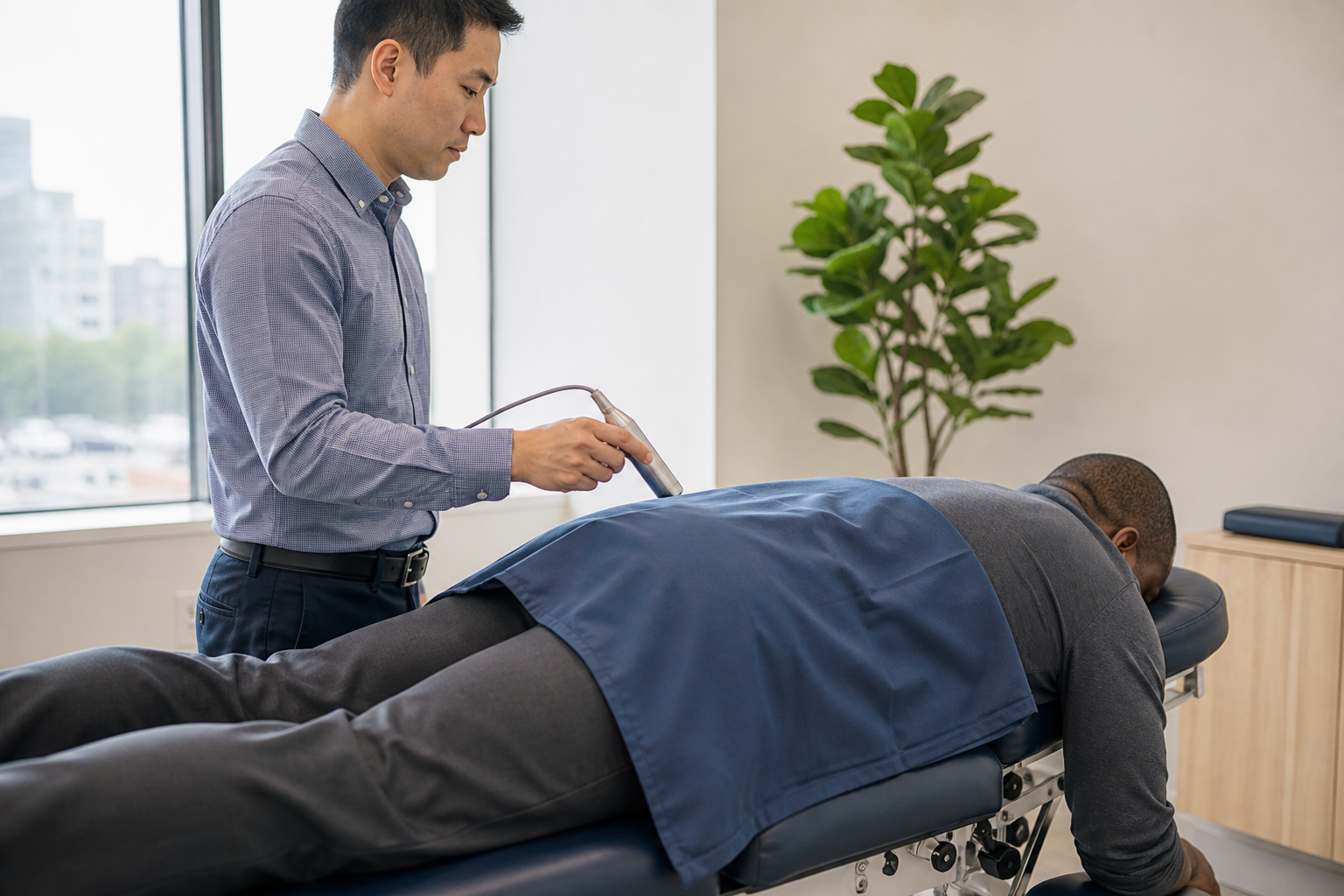
Low-level laser therapy sessions are non-invasive, applied externally, and typically brief, often a matter of minutes per session, delivered as a series over several weeks rather than a single visit. It doesn’t require needles, sedation, or recovery time the way an injection or procedure would. That accessibility is part of its appeal as an adjunct, but it also means expectations should stay realistic: a low-burden addition to your rehab plan, not a dramatic standalone intervention.

Where laser therapy may fit in a care plan
For selected patients whose presentation is consistent with the kind of case this research addresses, low-level laser therapy may be appropriate to discuss as an adjunct alongside physical therapy, not instead of it. It does not decompress a nerve or repair a disc. Non-invasive, technology-based support generally comes first, and if conservative care and laser therapy together are not enough, an epidural or facet injection is a common next step to ask about. If a case needs imaging, a different diagnosis entirely, or a specialist referral, a provider should say so plainly. Insurance coverage for any specific service, including under NY Medicaid, is worth confirming directly with the plan.
Frequently Asked Questions
Does low-level laser therapy work for sciatica?
There’s a direct clinical trial showing benefit when combined with physical therapy for one specific cause, disc-related lumbar radiculopathy. Broader claims about “sciatica” as a whole aren’t as well supported, since sciatica has multiple possible causes.
Can laser therapy repair a herniated disc?
No. No current evidence supports laser therapy repairing, shrinking, or reversing disc damage. Research studies it as a supporting therapy for pain and function, not a structural fix.
Is laser therapy a replacement for physical therapy in treating sciatica?
No, the strongest evidence specifically studied laser therapy added to physical therapy, not instead of it. It’s positioned as an adjunct, and continuing the rehab work alongside it appears to matter.
How strong is the evidence for laser therapy and sciatica?
Mixed but real. One direct 110-patient trial found benefit for discogenic lumbar radiculopathy specifically. A broader meta-analysis on a related approach (high-intensity laser therapy) found benefit too, but rated the certainty of that evidence as low to very low.
Is laser therapy used for all types of sciatica?
No. Each case should be evaluated individually, and non-invasive support like laser therapy may be appropriate for select presentations rather than universally. It is not a cure for disc-related radiculopathy, and when conservative care and laser therapy are not enough, the usual next steps are an injection or a referral elsewhere, depending on what the case calls for.
What does a laser therapy session for sciatica involve?
Sessions are non-invasive and applied externally to the affected area, typically brief and delivered as part of a series over several weeks, alongside continued physical therapy rather than in place of it. There’s no needle, sedation, or downtime involved.