

In short:
- TMJ disorders cause pain in the jaw joint and the muscles that move it. Many cases improve with simple, conservative care.
- Soft foods, jaw rest, heat or cold and avoiding wide yawning or gum chewing are common first steps.
- Physical therapy, oral splints from a dentist, and short-term medication can help when self-care isn’t enough.
- Device-based therapies such as laser therapy are sometimes used for muscle and joint pain.
- Surgery is rarely needed and is usually reserved for specific joint problems that don’t respond to other care.

Jaw pain affects eating, talking, sleep and even concentration. Temporomandibular disorders, often shortened to TMJ or TMD, are common, and most people find relief without invasive treatment. Here is how non-surgical care usually works.
What TMJ pain is
The temporomandibular joints connect the lower jaw to the skull, just in front of each ear. TMJ disorders can involve the joint itself, the disc inside it, or the chewing muscles around it. Common signs include jaw pain, clicking or popping, a tired or tight jaw, headaches near the temples, ear pain without an ear infection, and difficulty opening wide. The TMJ pain page covers symptoms in more detail.
Jaw clicking on its own is common. Clicking without pain or trouble opening the mouth often needs no treatment.
Conditions that can look similar
Pain near the jaw and ear is not always a TMJ problem. Other causes worth ruling out include:
- Dental problems, such as a cracked tooth, cavity or abscess
- Ear or sinus infections
- Tension headaches or migraines
- Trigeminal neuralgia, which causes brief, sharp, electric-shock-like pain in the face
- Neck problems that refer pain toward the jaw (see neck pain)
- Giant cell arteritis in people over about 50, which can cause jaw pain while chewing along with a new headache, scalp tenderness or vision changes and needs urgent care
Common triggers
- Clenching or grinding, often during sleep or stress
- Jaw injury
- Arthritis in the joint
- Posture habits, such as long periods with the head forward
- Chewing gum or hard foods often
Self-care that often helps first
- Eating softer foods and cutting food into small pieces
- Avoiding gum, very chewy foods and wide yawning
- Warm compresses for muscle tightness, or cold packs for sharper pain
- Gentle jaw stretches if a clinician recommends them
- Noticing daytime clenching and keeping teeth slightly apart with the tongue resting on the roof of the mouth
- Stress management, since tension often shows up in the jaw
Self-care works best when it is consistent for a few weeks, not just on bad days.
What to expect at an evaluation
A clinician will usually ask about pain patterns, clenching or grinding, sleep, stress and any past jaw injury. The exam often includes measuring how wide the mouth opens, feeling the jaw and neck muscles for tender spots, listening for clicking and checking how the jaw moves side to side. Imaging is not needed for most people. It may be considered when a joint problem, arthritis or injury is suspected, or when symptoms don’t respond to care.

Physical therapy
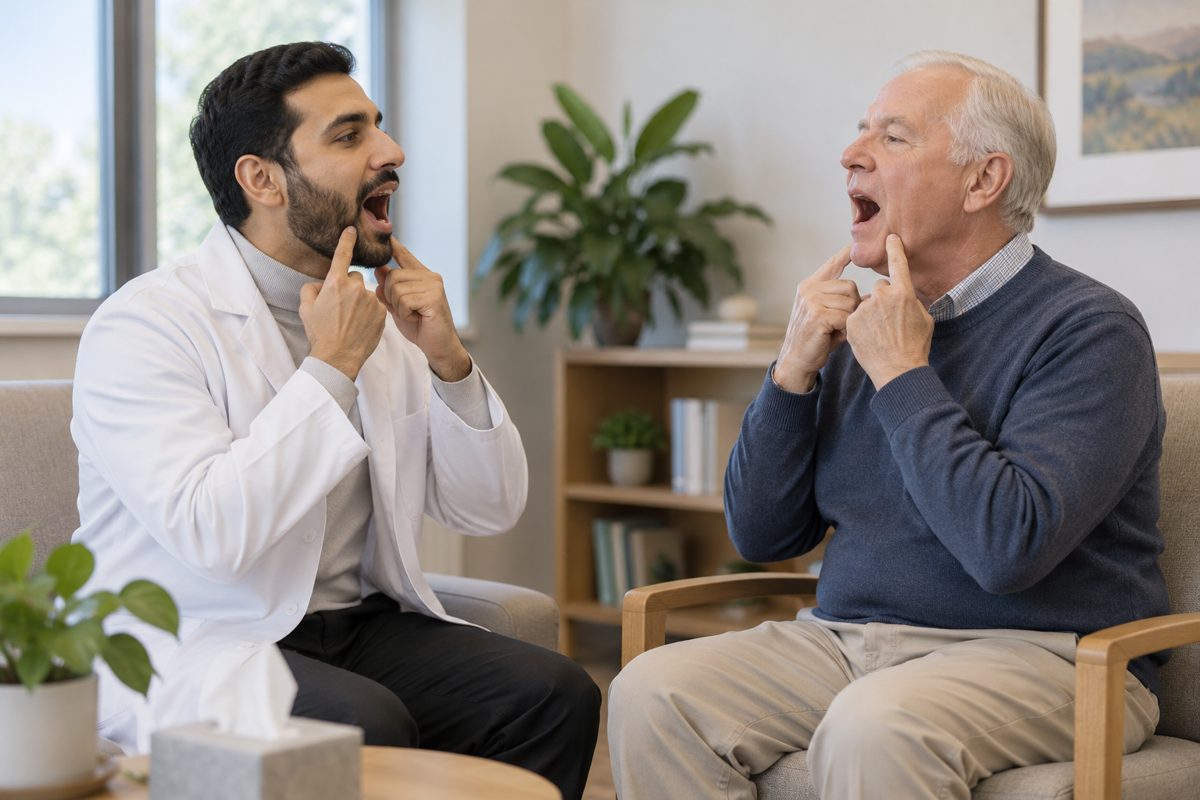
A physical therapist can work on jaw mobility, muscle tension, posture and neck mechanics that feed into jaw pain. Exercise and manual therapy have reasonable evidence for many muscle-related TMJ problems. Sessions often include gentle opening and closing exercises, massage of the chewing muscles, and work on head and neck posture. Most of the progress comes from short daily home exercises between visits. See physical and occupational therapy.
Oral splints and night guards
A dentist can fit a custom oral appliance, often worn at night, to reduce the effects of clenching and grinding. Over-the-counter guards fit less precisely, so a dental opinion is worth getting before relying on one long term. Guidance from the National Institute of Dental and Craniofacial Research favors conservative, reversible treatments first. Permanent changes to the bite, such as grinding down teeth, are generally not recommended as a TMJ treatment.
Medication
Short courses of anti-inflammatory medication can ease flares. A clinician may suggest muscle relaxants for a limited time or other options for persistent pain, depending on overall health.
Laser and other device-based therapies
Low-level laser therapy has been studied for TMJ pain, with some reviews finding it reduces pain compared with placebo, though results vary between studies. It’s usually combined with exercise and self-care. More on TMJ therapy and laser therapy.
Injections
For some people, trigger point injections into tight muscles, or injections into the joint, are considered when other care hasn’t helped. These are usually part of a broader plan, not a first step.
When surgery is considered
Surgery is uncommon for TMJ disorders. It may be discussed for specific joint problems, such as a jaw that locks and won’t open, that haven’t responded to conservative care. Getting more than one opinion before any irreversible procedure is reasonable.
Questions worth asking a provider
- Is the pain coming mainly from the muscles, the joint or both?
- Could a dental or ear problem be involved?
- Which self-care steps matter most for my case?
- Would a custom splint help, and is it reversible?
- How long should I try this plan before changing it?
- What signs mean I should come back sooner?
When to see a clinician
It’s worth getting evaluated if jaw pain lasts more than a couple of weeks, the jaw locks open or closed, eating becomes difficult, or pain follows an injury. Sudden jaw pain with chest pain or shortness of breath needs emergency care, since it can be a sign of a heart problem.
Frequently Asked Questions
How do you relieve TMJ pain fast?
Rest the jaw with soft foods, apply heat or cold, avoid gum and wide yawning, and use over-the-counter pain relief as directed.
Does TMJ go away on its own?
Many TMJ flares settle within weeks with self-care. Ongoing or recurring pain usually benefits from evaluation and a plan.
Can physical therapy help TMJ?
Yes. Jaw exercises, manual therapy and posture work can reduce pain and improve movement for many people.
Does laser therapy work for TMJ?
Some studies show pain reduction, but results vary. It works best alongside exercise and self-care.
What kind of doctor treats TMJ?
Dentists, oral and maxillofacial specialists, physical therapists and pain management clinicians all treat TMJ disorders, often together.
Is jaw clicking a sign of TMJ disorder?
It can be, but clicking alone is common. Clicking without pain or limited opening often needs no treatment.


