
In short:
- De Quervain’s tenosynovitis is inflammation of the tendons on the thumb side of the wrist, causing pain with gripping, twisting, or lifting with the thumb extended. It’s common in new parents (from repetitive lifting) and anyone doing repetitive wrist and thumb motion.
- Many cases improve with splinting, activity modification, and time. Cortisone injections are a common and often effective next step when that isn’t enough. Surgery is an option for cases that don’t respond to either.
- Surgery is not within every clinic’s scope. Care commonly starts with evaluation and non-invasive support first, with a cortisone injection if that is not enough, and referral to a hand specialist when surgery is the right next step.
- Getting an accurate diagnosis matters, since other conditions can mimic De Quervain’s, and the right treatment depends on confirming what’s actually going on.
- If a case looks like it needs surgery, a provider should say so plainly and point toward who provides that; a cortisone injection is often the step tried before it.

If the pain is on the thumb side of your wrist, worse with gripping, texting, lifting a baby, or twisting a jar lid, and it’s been sticking around, De Quervain’s tenosynovitis is a common cause. It’s named after the surgeon who first described it, not a description of what causes it, and it has nothing to do with a specific activity like “tennis elbow” implies for that condition.
What’s actually happening
De Quervain’s tenosynovitis involves irritation and thickening of the sheath surrounding two tendons that run along the thumb side of the wrist, the tendons that move your thumb away from your hand. Repetitive gripping, twisting, or thumb motion, texting, lifting and carrying (new parents are a classically affected group), certain manual work, causes irritation that thickens the tendon sheath and narrows the space the tendons glide through, producing pain, and sometimes a catching or snapping sensation, with thumb and wrist movement.
Who tends to get it
New parents are one of the most classically affected groups, from the repeated lifting, supporting, and positioning involved in caring for an infant, which is why it’s sometimes informally called “mommy thumb” or “baby wrist,” though it affects fathers and other caregivers too. It’s also common in people whose work or hobbies involve repetitive gripping or thumb use: manual labor, certain sports (golf, racquet sports), sewing, and extensive phone or keyboard use. Pregnancy and the postpartum period are also associated with a higher risk, likely related to hormonal changes affecting tendon tissue alongside the repetitive lifting.
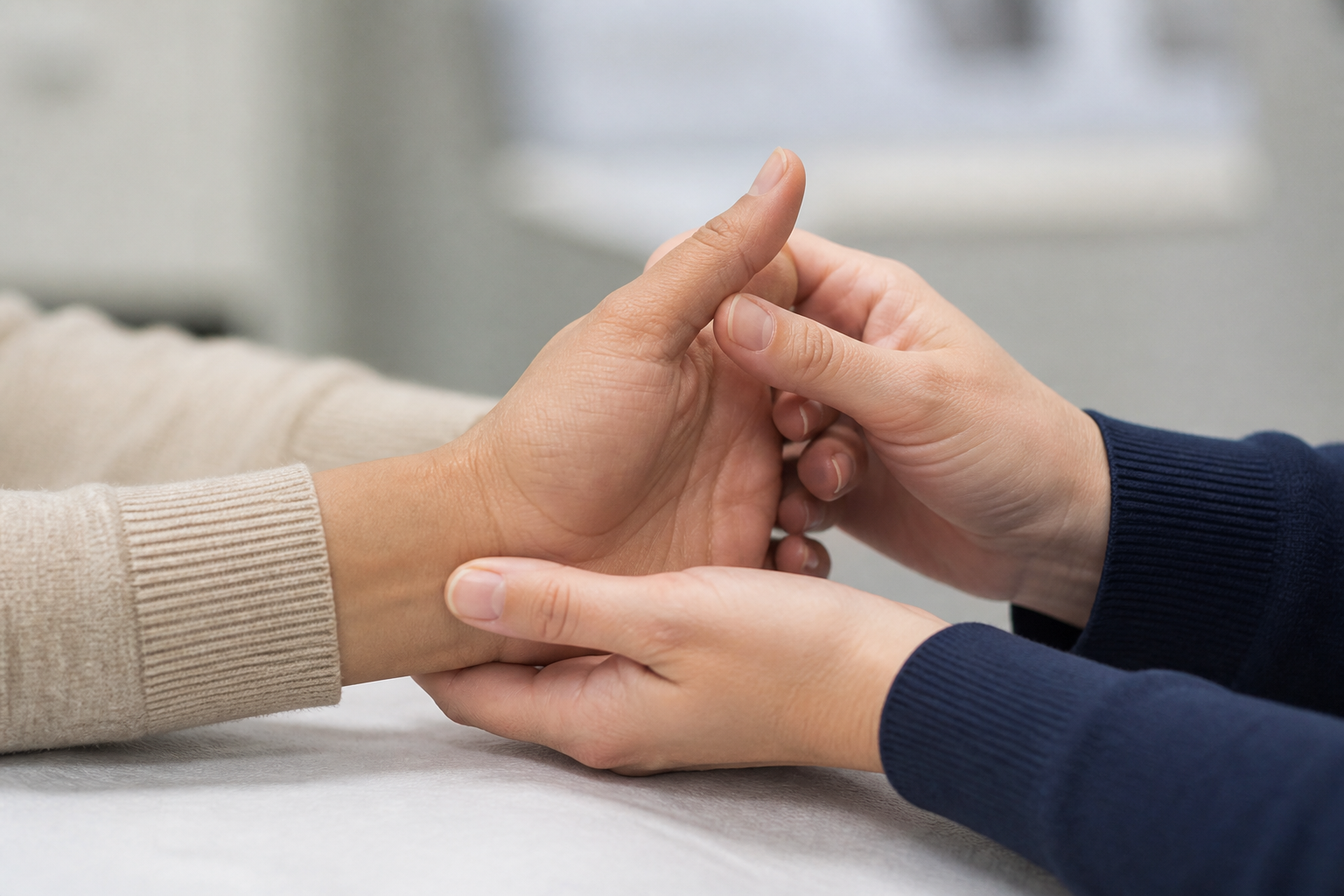
What the evidence actually supports first
Splinting. A thumb spica splint that immobilizes the wrist and thumb is a standard first-line approach, giving the irritated tendons a chance to settle.
Activity modification. Reducing the specific repetitive grip or twist that’s aggravating it, without necessarily stopping all hand use.
Anti-inflammatory self-care. Standard first-line support for the irritation and swelling involved.
Time. Mild cases can improve over a few weeks with consistent splinting and activity modification. More established cases often take longer.
Where cortisone and surgery fit
When splinting and activity modification alone haven’t resolved things, a cortisone injection into the tendon sheath is a common and often effective next step, and many patients get meaningful relief from one or two injections. Surgery, a small procedure to release the tendon sheath, is an option for cases that don’t respond to the steps above, and it has a generally good track record when needed; that part of care is handled by a hand specialist, so it is worth asking for that referral when a case calls for it.
Where Rockwell Pain Management fits
A proper FNP-led evaluation starts with confirming the diagnosis, since a few other wrist conditions can mimic De Quervain’s, and getting that right matters for choosing the right treatment. Splinting guidance and activity modification are the usual first-line, non-invasive support, with a cortisone injection if that’s the right next step. If a case needs a surgical opinion, a provider should say so directly. Questions about a specific wrist are best raised at an appointment, where they can be worked through in detail.

When to see a hand specialist sooner
Most cases of De Quervain’s can be evaluated and start with conservative care on a normal timeline. See a specialist sooner if pain is severe and not improving with splinting after a few weeks, if there’s numbness or tingling in the fingers (which can suggest a different or additional problem), or if you’ve already tried an injection without relief and are weighing next steps.
Frequently Asked Questions
What is the best treatment for De Quervain’s tenosynovitis?
Most cases start with splinting and activity modification. Cortisone injection is a common and often effective next step if that isn’t enough, and surgery is an option for cases that don’t respond to either. What’s “best” depends on how long you’ve had it and how it’s responded so far.
Can De Quervain’s tenosynovitis heal without cortisone or surgery?
Many mild to moderate cases improve with splinting, activity modification, and time alone. Whether that’s enough for your case depends on severity and how consistently the conservative steps are followed.
Does Rockwell Pain Management offer cortisone injections for De Quervain’s?
Yes, when splinting and activity modification haven’t been enough. Not every clinic performs surgery. A common path is evaluation, non-invasive support like splinting guidance, and a cortisone injection if needed, with referral to a hand specialist when a surgical opinion is the right next step.
How long does De Quervain’s tenosynovitis take to heal?
Mild cases can improve within a few weeks of consistent splinting and activity modification. More established or severe cases often take longer, and some ultimately need a cortisone injection or surgery to fully resolve.
What does De Quervain’s tenosynovitis feel like?
Pain on the thumb side of the wrist, worse with gripping, twisting, or moving the thumb away from the hand, sometimes with a catching or snapping sensation. It’s commonly seen in new parents and people doing repetitive hand or thumb motion.
When is surgery necessary for De Quervain’s tenosynovitis?
Surgery is generally considered when splinting, activity modification, and cortisone injection haven’t resolved symptoms. It’s a conversation for a hand specialist, and most cases don’t end up needing it.
Is De Quervain’s tenosynovitis common after having a baby?
Yes, it’s common enough in new parents that it has an informal nickname related to infant care. The repetitive lifting and positioning involved in caring for a baby, combined with postpartum hormonal changes, make this a frequently seen presentation, and it generally responds to the same conservative approach as other cases.