

In short:
- “Non-invasive” is a category description, not a guarantee of effectiveness or a specific treatment claim. It means no surgery, no injections, and no cutting or puncturing the body.
- The category includes a range of approaches: physical therapy, activity modification, and technology-based options like shockwave, EMTT, and laser therapy.
- Marketing language around this category varies widely in accuracy. Ask specifically what a clinic offers and what evidence supports it for your condition.
- Non-invasive care is a legitimate, evidence-informed option for many musculoskeletal conditions, but it isn’t a fit for every diagnosis.
- Some clinics lead with non-invasive, technology-based care: no surgery, no opioid or controlled-substance prescribing, and injections considered when that is not enough. A good clinic will say when that model is not the right fit for a given patient.

If you’ve searched “non-invasive pain management” and found a wide range of clinics all using the term slightly differently, that’s because the category is broader than a single treatment. Here’s what it actually means, and how to evaluate whether a specific clinic’s version of it fits your situation.
What “non-invasive” actually means
At its core, non-invasive means treatment that doesn’t involve surgery, injections, or anything that punctures or cuts into the body. That’s it, it’s a description of what a treatment doesn’t do, not a claim about how well it works or what specific condition it treats. A wide range of approaches fall under this umbrella, from physical therapy and activity modification to technology-based options like shockwave therapy, electromagnetic transduction therapy (EMTT), and low-level laser therapy.
Why the term gets used loosely in marketing
Because “non-invasive” sounds appealing (no needles, no surgery, no downtime), it’s a common marketing term, and that popularity means it sometimes gets stretched to imply more than it should, like suggesting a treatment can replace surgery or medication for any condition, which isn’t accurate for every diagnosis. The category itself is legitimate. The issue is when marketing language implies a specific outcome the underlying evidence doesn’t actually support for your specific condition.
What a legitimate non-invasive approach typically includes
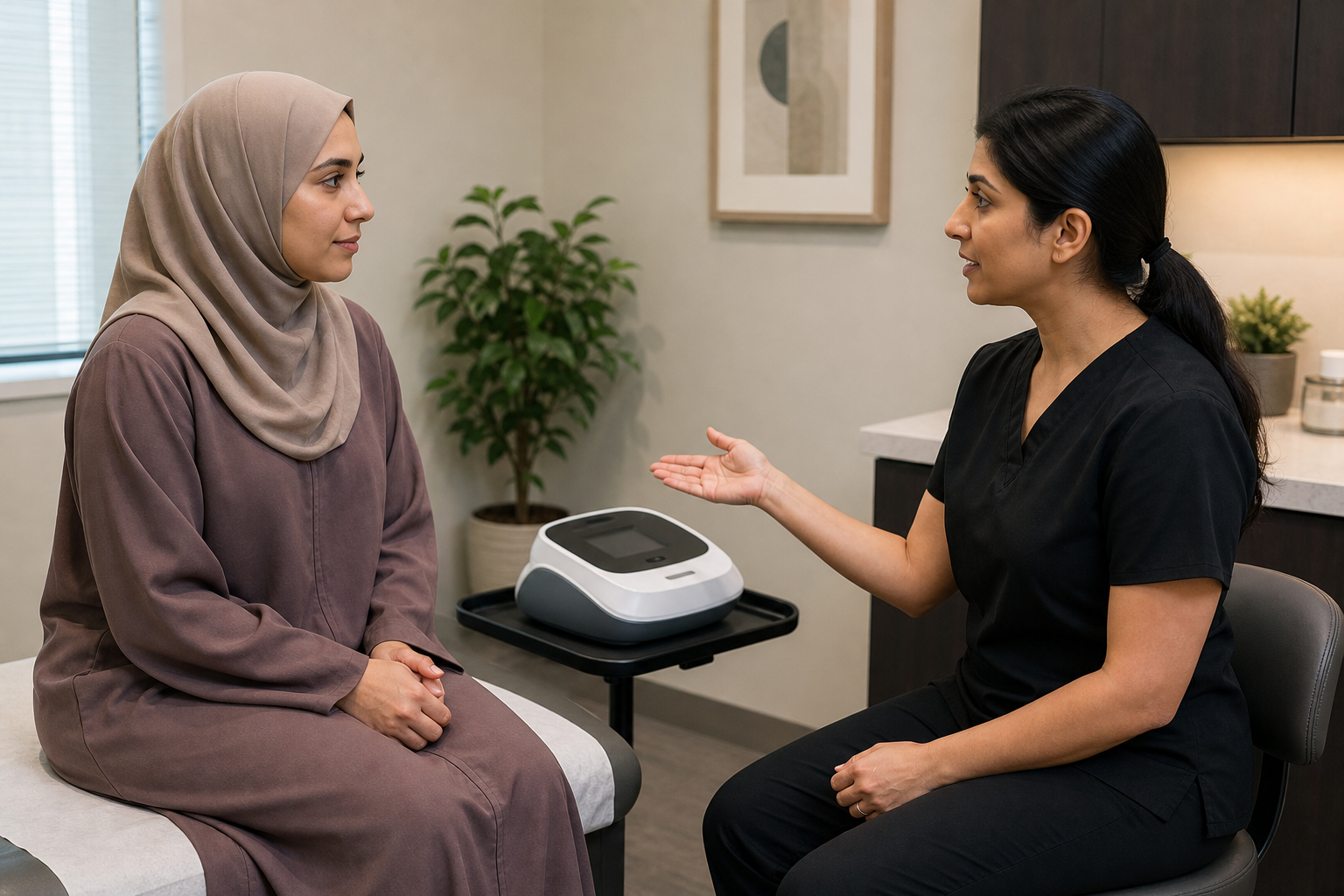
A well-run non-invasive practice generally starts with an evaluation of your specific condition, then discusses options that fit your diagnosis, potentially including physical therapy coordination, activity and ergonomic guidance, and technology-based treatments where the evidence supports them for your specific situation. It should also include a clear conversation about what the approach doesn’t claim to do, and when your case needs something outside that scope.
Questions to ask a clinic marketing itself as non-invasive
Ask specifically: what treatments do you actually offer under that label? What’s the evidence for this approach for my specific condition, not pain in general? What happens if this doesn’t work for my case? Does “non-invasive” here mean no procedures at all, or does it include some procedures that fall short of surgery? Clinics vary in how they define the term, so getting specifics matters more than the label itself.
How non-invasive treatments actually work, in general terms
Even though the specific mechanisms differ across modalities, non-invasive treatments generally work by stimulating the body’s own tissue response, blood flow, or nervous system, from the outside, rather than by directly repairing structural damage the way surgery does or numbing a specific area the way an injection does. Shockwave therapy delivers acoustic pressure waves. EMTT uses electromagnetic energy without direct contact. Laser therapy delivers light energy at a cellular level. Physical therapy works through movement, strength, and load management. None of these physically alter bone, disc, or nerve structure, which is exactly why they’re appropriate for some conditions and not others.
When non-invasive care is, and isn’t, the right fit
Non-invasive approaches have real evidence for many musculoskeletal conditions, tendon and soft-tissue issues, certain types of joint pain, and general mechanical back pain among them. But some conditions genuinely need injections, surgery, or medication management, nerve compression requiring surgical decompression is one example, and no amount of non-invasive treatment is a substitute in those cases. A clinic that’s honest about this distinction, rather than implying its approach fits everything, is one worth taking seriously.

How a non-invasive practice approaches care
A non-invasive, technology-based practice typically works without surgery and leads with options other than medication. The evaluation looks at the condition and considers whether options like shockwave therapy, EMTT, or laser therapy, alongside physical therapy coordination, are appropriate for the specific diagnosis, with injections considered if those are not enough. A case that needs something outside that scope should prompt a clear referral toward the right next step.
Frequently Asked Questions
What does non-invasive pain management mean?
It means treatment that doesn’t involve surgery, injections, or anything that punctures or cuts the body. It’s a description of the treatment category, not a guarantee of a specific outcome.
Is non-invasive pain care as effective as injections or surgery?
It depends entirely on the condition. Non-invasive approaches have real evidence for many musculoskeletal conditions, while some conditions genuinely need procedural or surgical care. Neither approach is universally better.
What treatments count as non-invasive pain care?
Physical therapy, activity modification, and technology-based options like shockwave therapy, EMTT, and low-level laser therapy are common examples. The category is broad rather than a single treatment.
How do I know if a clinic’s “non-invasive” claim is accurate?
Ask specifically what treatments they offer under that label and what evidence supports the approach for your specific condition. A vague or overly broad answer is worth questioning further.
Can non-invasive treatment replace surgery?
Not for every condition. Some conditions, particularly ones involving nerve compression or structural damage requiring repair, need surgical treatment that non-invasive care can’t substitute for.
Do non-invasive pain clinics offer procedures or injections?
These clinics lead with non-invasive, technology-based care, and many also offer injections when that is not enough. Most do not perform surgery, and prescribing approaches vary, so it is worth asking. A good clinic will refer a patient elsewhere if the condition needs care outside its scope.


