In short:
- Golfer’s elbow (medial epicondylitis) is an overuse injury to the tendons on the inside of the elbow, most often from repetitive gripping or wrist-flexing motion. Most people who get it have never swung a golf club.
- Conservative care, activity modification, bracing, and a structured strengthening program, is the first-line approach and works for most people, though recovery is often gradual.
- Cortisone injections can offer relief, and they are commonly considered when conservative care has not been enough. Shockwave therapy is an option some patients ask about, with evidence that is less studied for this specific condition than for some others.
- A reasonable starting point is a clinical evaluation and non-invasive support first, with a cortisone injection considered if that is needed, and referral to a specialist if the case needs imaging or a surgical opinion.
- See a specialist if grip strength keeps declining, pain doesn’t improve after a few months of correctly done conservative care, or you suspect a tear rather than simple overuse.

If the inside of your elbow and forearm hurt with gripping, shaking hands, or turning a doorknob, golfer’s elbow is a common cause, and it’s less studied and less talked about than its counterpart on the outside of the elbow, tennis elbow. It’s a milder overuse pattern for most people, but the underlying mechanics and treatment approach are similar.
What’s actually happening
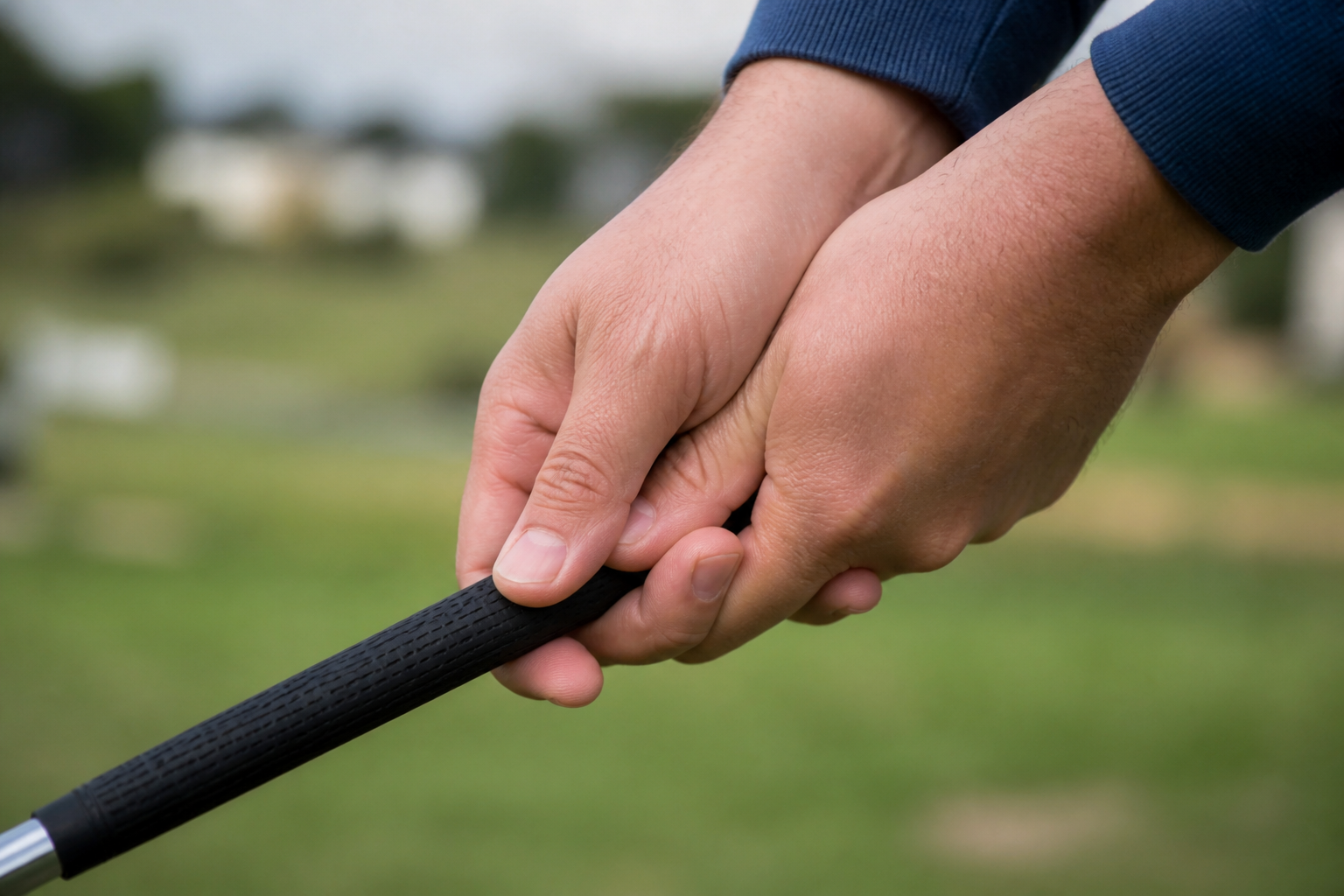
Golfer’s elbow is an overuse injury to the tendons that attach your forearm’s wrist-flexor muscles to the inside of the elbow (the medial epicondyle). Repeated gripping, wrist flexion, or forearm rotation, from golf, but just as commonly from weightlifting, throwing sports, manual labor, or typing, causes small-scale tendon wear faster than it can repair itself. It’s less common than tennis elbow but follows a similar underlying pattern on the opposite side of the joint.
Who tends to get it
Despite the name, golf accounts for a minority of cases. It shows up commonly in weightlifters (especially with heavy gripping movements like deadlifts and rows), throwing athletes, and people doing manual or repetitive work involving forceful gripping or wrist flexion, carpentry, plumbing, and similar trades among them. Anyone with a sudden increase in repetitive gripping activity, whether from a new workout routine or a change in job tasks, is at higher risk, since the tendon hasn’t had time to adapt to the new load.
What the evidence actually supports first
- Activity and load modification. Reducing the specific gripping or wrist-flexing motion that’s aggravating it, without necessarily stopping activity altogether.
- Bracing. A counterforce brace worn on the forearm can reduce strain on the tendon during daily tasks, similar to the approach used for tennis elbow.
- Eccentric strengthening exercises. A structured, progressive strengthening program, usually guided by physical therapy, tends to be better supported for long-term recovery than rest alone.
- Time. Golfer’s elbow often takes weeks to a few months to meaningfully improve with consistent conservative care, similar to other tendon overuse injuries.
Where cortisone and shockwave fit
Cortisone injections can provide relief for golfer’s elbow, particularly in the short term, though like many tendon conditions, the benefit is not always long-lasting and repeated injections have tradeoffs. Clinics that offer cortisone injections typically do so after conservative care has not been enough. Shockwave therapy is something some patients ask about for medial elbow pain, but it is a less-studied application than tennis elbow or several other tendon conditions, and the evidence base specifically for golfer’s elbow is thinner. That uncertainty is worth stating plainly rather than glossing over. Anyone weighing whether it is worth trying should raise the question directly with a provider.
Where Rockwell Pain Management fits
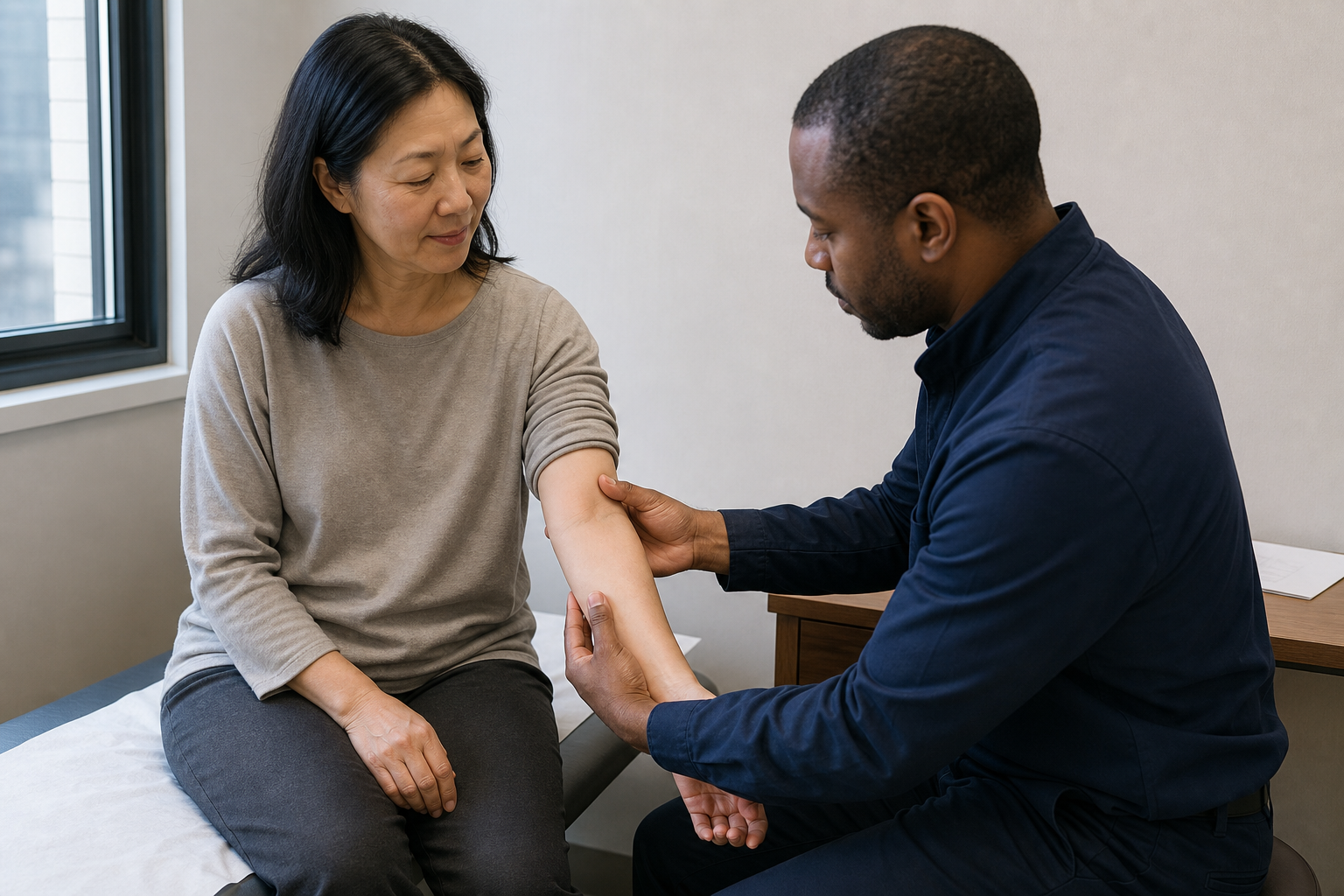
Surgery is rarely the starting point for this condition. A proper FNP-led evaluation confirms whether the problem is actually golfer’s elbow rather than a different cause of inner-elbow pain, puts conservative care first, and considers a cortisone injection if that is the right next step. When a case needs imaging or an orthopedic referral, a provider should say so directly rather than fitting the patient into whichever service happens to be on hand. Questions about a specific case are worth raising at an appointment and working through in detail.
When to see a specialist
Most golfer’s elbow resolves with conservative care over time. See a specialist if you notice a real decline in grip strength, if pain hasn’t improved after a few months of correctly done conservative care, or if the pain is significantly affecting your ability to work or use your hand for daily tasks. A sudden, distinct pop or tear sensation is also worth prompt evaluation, since that can suggest something beyond typical overuse.
Frequently Asked Questions
What is the best treatment for golfer’s elbow?
Activity modification, a counterforce brace, and a structured, progressive strengthening program are the best-supported first steps. Recovery is usually gradual, often taking weeks to a few months of consistent effort.
Is golfer’s elbow the same as tennis elbow?
No, though they’re related. Golfer’s elbow affects the tendons on the inside of the elbow (medial epicondylitis), while tennis elbow affects the outside (lateral epicondylitis). Both are overuse injuries with a similar treatment approach, but they’re on opposite sides of the joint.
Does shockwave therapy help golfer’s elbow?
It is something some patients ask about, but the evidence specifically for golfer’s elbow is more limited than for some other conditions treated with shockwave. Whether it is worth trying depends on the specific case, and is worth discussing with a provider rather than assuming either way.
Can golfer’s elbow heal on its own without treatment?
Mild cases can improve with rest and reduced aggravating activity. But without addressing the repetitive strain directly, through bracing and structured strengthening, it can become chronic or keep recurring.
Does Rockwell Pain Management offer cortisone injections for golfer’s elbow?
Yes, when conservative care has not been enough. Many clinics treating this condition do not perform surgery. The usual sequence is a clinical evaluation and non-invasive support first, a cortisone injection if needed, and a referral out if a surgical opinion fits the case.
When should I see a doctor for golfer’s elbow?
See a specialist if grip strength is noticeably declining, pain persists past a few months of correctly done conservative care, or you experienced a sudden pop or tear sensation rather than gradual overuse pain.
How long does golfer’s elbow take to heal?
Most cases take anywhere from several weeks to a few months of consistent conservative care, bracing, activity modification, and structured strengthening, to meaningfully improve. Continuing the aggravating activity without modification tends to prolong it.